Are you struggling to get traffic to your blog? Do you want to increase your online presence and reach a wider audience? Look no further. In this step-by-step tutorial, we will show you how to get traffic to your blog using proven methods and strategies. You will learn how to optimize your blog for search engines, create engaging content, and promote your blog to drive more traffic and increase your online visibility. By the end of this guide, you will have a clear understanding of how to get traffic to your blog and start building a loyal readership.
Step 1: Optimize Your Blog for Search Engines to Increase Traffic
Optimizing your blog for search engines is crucial to get traffic to your blog. This involves using relevant keywords in your blog posts, meta descriptions, and headings. You should also ensure that your blog is mobile-friendly and has a fast loading speed. For example, you can use tools like Google Keyword Planner to find relevant keywords and phrases for your blog posts. Additionally, you can use plugins like Yoast SEO to optimize your blog posts and improve your search engine rankings. 
Step 2: Create High-Quality and Engaging Content to Drive Traffic
Creating high-quality and engaging content is essential to get traffic to your blog. Your content should be informative, entertaining, and relevant to your target audience. You can create blog posts, videos, infographics, and other types of content that resonate with your audience. For example, you can create a series of blog posts on a specific topic or create a video tutorial on a topic related to your niche. Additionally, you can use social media to promote your content and drive traffic to your blog. 
Step 3: Use Social Media to Promote Your Blog and Increase Traffic
Social media is a powerful tool to promote your blog and get traffic to your blog. You can use platforms like Facebook, Twitter, Instagram, and LinkedIn to promote your blog posts and engage with your audience. For example, you can share your blog posts on your social media profiles, participate in online communities related to your niche, and collaborate with other bloggers and influencers in your industry. Additionally, you can use paid social media advertising to reach a wider audience and drive more traffic to your blog.
Step 4: Build Backlinks to Your Blog to Improve Search Engine Rankings and Increase Traffic
Building backlinks to your blog is crucial to improve your search engine rankings and get traffic to your blog. Backlinks are links from other websites that point to your blog, and they can help to increase your blog's authority and visibility. You can build backlinks by guest posting on other blogs, participating in online communities, and collaborating with other bloggers and influencers in your industry. For example, you can write a guest post for another blog and include a link to your blog in your author bio. Additionally, you can use tools like Ahrefs to find broken links on other websites and replace them with a link to a similar article on your blog.
Step 5: Use Email Marketing to Drive Traffic to Your Blog and Increase Engagement
Using email marketing is an effective way to drive traffic to your blog and increase engagement with your audience. You can build an email list by offering a free resource, such as an eBook or a webinar, in exchange for email addresses. Then, you can send regular newsletters to your subscribers with links to your latest blog posts, promotions, and other relevant content. For example, you can use email marketing tools like Mailchimp to create and send newsletters to your subscribers. Additionally, you can use personalization and segmentation to increase the effectiveness of your email marketing campaigns.
Step 6: Optimize Your Blog Posts for Long-Tail Keywords to Increase Traffic
Optimizing your blog posts for long-tail keywords is an effective way to increase traffic to your blog. Long-tail keywords are specific phrases that have lower competition and higher conversion rates. You can use tools like Google Keyword Planner to find long-tail keywords related to your niche and optimize your blog posts accordingly. For example, you can use a long-tail keyword like "how to get traffic to your blog" instead of a generic keyword like "blog traffic". Additionally, you can use header tags, meta descriptions, and internal linking to optimize your blog posts for long-tail keywords.
Step 7: Use Guest Blogging to Build Backlinks and Increase Traffic to Your Blog
Using guest blogging is an effective way to build backlinks and increase traffic to your blog. Guest blogging involves writing articles for other blogs in your niche and including a link to your blog in your author bio. You can find guest blogging opportunities by searching for blogs in your niche and reaching out to the owners with a pitch. For example, you can search for blogs that accept guest posts and have a relevant audience. Additionally, you can use tools like Ahrefs to find guest blogging opportunities and track your backlinks.
Step 8: Use Internal Linking to Improve User Experience and Increase Traffic to Your Blog
Using internal linking is an effective way to improve user experience and increase traffic to your blog. Internal linking involves linking to other relevant articles on your blog to help users navigate and find more information. You can use internal linking to increase engagement, reduce bounce rates, and improve your search engine rankings. For example, you can link to other articles on your blog that are related to the topic you are writing about. Additionally, you can use anchor text and descriptive text to make your internal links more effective.
Step 9: Use Analytics to Track Your Traffic and Optimize Your Blog for Better Results
Using analytics is an essential step to track your traffic and optimize your blog for better results. You can use tools like Google Analytics to track your website traffic, engagement, and conversion rates. You can also use analytics to identify areas for improvement and optimize your blog accordingly. For example, you can use analytics to identify which blog posts are driving the most traffic and engagement, and create more content on those topics. Additionally, you can use analytics to track your email marketing campaigns and optimize your newsletters for better results.
Frequently Asked Questions
Q: How long does it take to get traffic to my blog?
A: It can take several weeks or months to get significant traffic to your blog, depending on your niche, content quality, and marketing efforts.
Q: What is the most effective way to promote my blog?
A: The most effective way to promote your blog is to use a combination of search engine optimization, social media marketing, email marketing, and content marketing.
Q: How can I increase my blog's visibility and credibility?
A: You can increase your blog's visibility and credibility by creating high-quality content, building backlinks, and engaging with your audience.
How To Get More Traffic To Your Blog In 7 Steps

How To Get More Traffic To Your Blog In 7 Steps
How To Get Traffic To Your Blog - Greenwich SEO - Singapore SEO Company

How to Get Traffic to Your Blog - Greenwich SEO - Singapore SEO Company
Get Traffic To Your Blog For Google Chrome - Extension Download
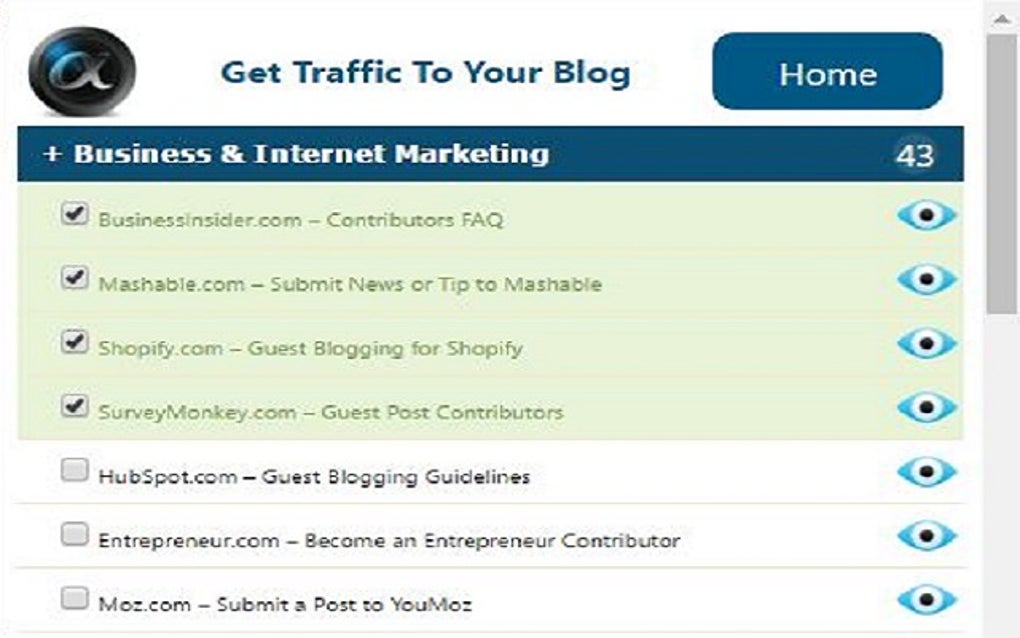
Get Traffic To Your Blog for Google Chrome - Extension Download